
What every church should know!
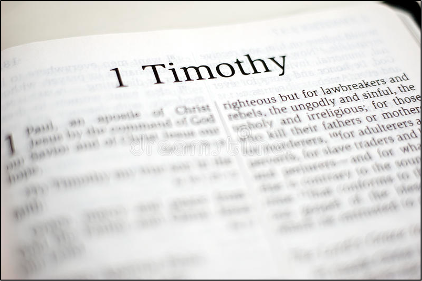
The Bible is God’s word, and the only source for what churches can do.
Garland Van Dyke
About Bible Authority
It’s about God’s word
All churches should hold a firm conviction that the Bible is the sole, sufficient, and final authority in all matters of faith and practice. This view emphasizes that God has fully revealed His will through.
Scripture, particularly the New Testament, is the pattern for the church today. No human creed, tradition, council, pope, or modern revelation holds equal or superior authority. The Bible alone guides doctrine, worship, church organization, and Christian living.
 This commitment stems from the belief that the Scriptures are inspired by God (2 Timothy 3:16-17), complete (Jude 3; 2 Peter 1:3), and sufficient to equip believers for every good work. Anything added to or subtracted from God’s word is unauthorized and dangerous (Revelation 22:18-19; Galatians 1:6-9).
A classic expression of this principle is the plea to “speak where the Bible speaks and be silent where the Bible is silent.” This echoes the restoration ideal of returning to the New Testament pattern without human additions.
Practical Implications
For the Lord’s church
No human creeds. Creeds divide rather than unite; the Bible alone suffices as the standard (1 Corinthians 4:6 — “not to think beyond what is written”).
Why the Bible Holds Supreme Authority
No one should do anything without biblical authority
God is the source of all authority in religion.
Authority flows from God the Father, who delegated all authority to Jesus Christ (Matthew 28:18; Ephesians 1:20-23). Jesus, in turn, promised the Holy Spirit would guide the apostles into all truth and bring to remembrance His teachings (John 16:13; 14:26). The apostles then recorded this inspired message in the New Testament writings.
The apostles’ writings carry divine authority.
Paul declared that what he wrote was “the commandments of the Lord” (1 Corinthians 14:37). Peter placed Paul’s letters alongside “the other Scriptures” (2 Peter 3:15-16), affirming their inspired status. The church submits to Christ by submitting to His word as revealed in the Bible.
The Bible is complete and sufficient.
All Scripture is given by inspiration of God, and is profitable for doctrine, for reproof, for correction, for instruction in righteousness, that the man of God may be complete, thoroughly equipped for every good work” (2 Timothy 3:16-17). No additional revelation is needed for salvation, worship, or godly living.
The Bible teaches that divine authority is conveyed through three biblical methods:
Direct commands or statements — Explicit instructions (e.g., “Repent and be baptized” in Acts 2:38).
Approved apostolic examples — Practices shown and endorsed in the New Testament church (e.g., the weekly observance of the Lord’s Supper on the first day of the week in Acts 20:7; 1 Corinthians 16:1-2).
Necessary inferences — Conclusions that must logically follow from what is stated (e.g., the use of bread and fruit of the vine in the Lord’s Supper is necessarily inferred from the elements Jesus used and commanded).
Anything lacking these forms of authorization is not permitted in faith or practice. This principle prevents additions such as instrumental music in worship, which lack New Testament command, example, or inference.
A Call to Return to Bible Authority
A call for all churches
In a world of religious confusion, where doctrines vary widely, the plea is simple:
Let us go back to the Bible. Reject human traditions that elevate themselves above Scripture. Test every teaching by the inspired word (Acts 17:11).
Matthews St. church of Christ
1915 Matthews St, Bay City, TX 77414
PO Box 1522
Garland.churchofchrist@gmail.com
Schedule a virtual 30-minute Bible Study at: https://calendly.com/garlandtcm