
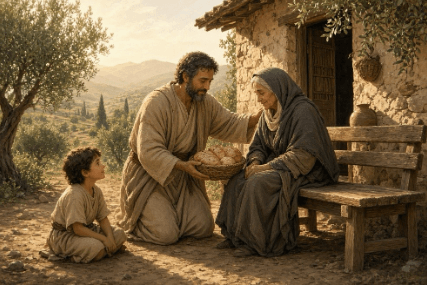
“Religion that is pure and undefiled before God the Father is this: to visit orphans and widows in their affliction, and to keep oneself unstained from the world.” James 1:27.
James 1:27 is directed to individuals, not to churches as institutions.
The language and context
The surrounding verses make the personal focus clear:
- James 1:26 speaks of “anyone” who “does not bridle his tongue” and “deceives his own heart”—the religion of that individual is worthless.
- James 1:27 continues in the same vein: pure religion is “to visit orphans and widows in their affliction, and to keep oneself unstained from the world.” The reflexive “oneself” (Greek heauton) is singular and personal.
The whole section (James 1:19–27) is about being doers of the word rather than hearers only, controlling one’s speech, and living out genuine piety. James describes what genuine personal religion looks like before God, not assigning a program to the assembled church.
“Visit” means personal care
The Greek word episkeptomai means more than a casual call. It means to look in on, examine, and actively care for someone in need. It is the kind of personal action an individual Christian takes toward people he or she knows or encounters—providing help, comfort, and practical assistance.
Relation to the church
The New Testament does show churches caring for needy saints (Acts 6:1–6; 1 Timothy 5:3–16 distinguishes widows who are the family’s responsibility from those who are “widows indeed” and may be enrolled by the church). Those passages assign specific, limited collective responsibilities. James 1:27, however, does not. It is framed as the personal expression of pure religion for every believer.
In short, James 1:27 describes the life of the individual Christian: practical compassion toward the vulnerable and personal purity before God. It is not a directive for the church as an organization to undertake social work.
Garland Van Dyke
garland.churchofchrist@gmail.com
Matthews St. church of Christ